

Sangha Recipes
Food, mindfulness & community
“Just as in the great ocean there is but one taste — the taste of salt, so in this Dhamma there is but one taste — the taste of freedom”
— The Buddha
Sangharakshita, the founder of The Triratna Buddhist Community, has spoken and written extensively on food, particularly in relation to its ethical and spiritual implications within a Buddhist context.
Food occupies a very important place in our lives, and occupies many hours of our lifetime. An activity to which we devote so much time, energy, and money, and for which we require special provision in our houses in the form of kitchens, dining rooms and utensils, very definitely needs to be brought within the influence of our Buddhist principles.
– Edited from The Essential Sangharakshita: Windhorse Publications
Vegetarian Diet
The most important Buddhist principle is non-violence, reverence for life. This means, among many other things, vegetarianism.
Sometimes circumstances at home may be difficult – it may be impossible to be strictly vegetarian – but at least one can move towards it, perhaps by giving up meat and fish on certain days of the week, or on certain occasions.
It should be said that the Buddha himself did not insist on vegetarianism. He considered it more important for people to practise not picking and choosing what they ate, but accepting what they were given.
– Edited from The Essential Sangharakshita: Windhorse Publications
Mindful Eating
Eating should be quiet, peaceful, even meditative.
As well as being vegetarian, one should practise loving-kindness towards oneself by eating pure and wholesome food. At the same time, one should eat only as much as is necessary for maintaining good health. Sometimes we forget that the purpose of eating is just to keep the body going.
Also, one shouldn’t eat neurotically; one shouldn’t use food in an attempt to satisfy some other need.
– Edited from The Essential Sangharakshita: Windhorse Publications
Opportunity for Reflection
It is useful to reflect on where your food comes from and all the circumstances that had to come into place to enable you to eat.
Eating is also an opportunity for gratitude, not only towards those who prepared the meal but also to the endless stream of people who worked to provide the ingredients, the farmers, the market workers, the transporters, the factory workers, the bakers and supermarket workers, and on and on.
Metaphorical Significance
The Buddha used many metaphors in his teaching including the metaphor of food.
One of the most famous is:
Just as the great ocean has one taste, the taste of salt, so also this Teaching has one taste, the taste of freedom.
– Edited from Uposatha Sutta, Udana 5.5.
The Freedom of which the Buddha speaks is freedom from our self-imposed slavery to our habitual psychological and behaviourial patterns through which we turn pain into suffering.
One of the ways we can practice the Path to Freedom in our everyday lives is by being mindful of our relationship to food and eating. Observing the rising and passing away of patterns and emotions in relation to food.
The Malta Sangha regularly shares food during our events, and we love sharing the recipes of what we make!
In the following section are recipes shared by our community for you to explore.
Please review these recipes beforehand looking for allergies, food intolerances, or sensitivities of those who will eat the dishes prepared.
The Malta Buddhist Centre takes no responsibilty for any negative outcomes as a result of using these recipies.
Our Recipes
Click a recipe to expand it
Sangha Malta DipDates, fresh cheese & garlic
Sangha Malta Dip
Ingredients
- 300 g fresh cheese with herbs
- 200 g dates
- 2 garlic cloves
- 2 tbsp ajvar mild
- 1/2 tsp salt 1/2
- 1/2 tsp curry powder
- 1/2 tsp pepper
- 1 tbsp orange juice / lemon juice / honey
Instructions
- Remove the stone from the dates and cut the dates in very small pieces
- Chop the garlic
- Put everything in a bowl and stir
- Let it lie in the fridge for at least one day
King Oyster Mushroom BurgersVegetarian burgers
King Oyster Mushroom Burgers
Equipment
- 1 Cutting Board
- 3 Large bowls
- 1 Frying pan
- Baking sheet
- 1 Fork and Knife
- 1 Whisk
- 1 Grater
- 1 Pair of tongs
Ingredients
- 500 g King Oyster Mushrooms
- 4 tbsp rapeseed oil
- ½ tsp garlic powder
- 1 tsp smoked paprika
- ½ tsp Cayenne Pepper
- ½ tsp ground cumin
- 4 tbsp Ketchup
- 1 tbsp vegan Worcester Sauce
- 1 tbsp brown sugar
- 1 tbsp balsamic vinegar
- 100 g Red cabbage
- ½ Carrot
- 1 spring onion
- ½ tbsp toasted Sesame oil
- 3 tbsp vegan mayonnaise
- 1 tbsp white balsamic vinegar
- 1 Lime
- 2 vegan burger buns
- Salt and Pepper (to taste)
Instructions
- Step 1/4Ingredients: 500 g King Oyster mushrooms, 4 tbsp rapeseed oil, ½ tsp garlic powder, 1 tsp smoked paprika, ½ tsp cayenne pepper, ½ tsp ground cumin, salt, pepper. Utensils: Cutting board, fork, large bowl, frying pan, spatula.Hold the King Oyster mushrooms by the cap and use a fork to shred them lengthwise into fine strips. If necessary, use your hands to pull them apart even further. In a large bowl, mix the rapeseed oil with the garlic powder, paprika, cayenne pepper, cumin, salt, and pepper. Add the mushroom strips and toss to coat in the marinade. Place the mushrooms in a pan preheated over high heat and fry undisturbed for about 5 minutes to develop roasted aromas. Then, fry for another 5–7 minutes, stirring occasionally, until soft.Step 2/4Ingredients: 4 tbsp ketchup, 1 tbsp vegan Worcestershire sauce, 1 tbsp brown sugar, 1 tbsp balsamic vinegar. Utensils:Oven, large bowl, whisk, parchment paper, baking sheet.Preheat the oven to 200°C (approx. 400°F) top/bottom heat. In a large bowl, whisk together the ketchup, Worcestershire sauce, brown sugar, and balsamic vinegar. Add the warm mushrooms and mix well. Spread the mixture onto a baking sheet lined with parchment paper and bake in the oven for about 15 minutes until golden brown.Step 3/4Ingredients: 100 g red cabbage, ½ carrot, 1 spring onion, ½ tbsp toasted sesame oil, 2 tbsp vegan mayonnaise, 1 tbsp white balsamic vinegar, ½ lime, salt, pepper. Utensils: Grater, knife, large bowl.Meanwhile, thinly slice or shred the red cabbage, coarsely grate the carrot, and slice the spring onion into fine rings. In a large bowl, mix the cabbage with the sesame oil, white balsamic vinegar, and half of the mayonnaise. Massage the cabbage with your hands for about 1 minute until it softens. Then add the carrots and spring onions, mix together, and season to taste with salt, pepper, and some lime juice.Step 4/4Ingredients: 2 vegan burger buns, 2 tbsp vegan mayonnaise, ½ lime. Utensils: Tongs.Toast the burger buns in a pan, cut-side down, until golden. Spread each bun with the remaining mayonnaise and drizzle with a little lime juice. Arrange the pulled mushrooms and coleslaw on top to assemble the burgers.
Versatile Base CakeCustomise with fruit, nuts, or seeds
Versatile base cake
Ingredients
- 200 g Coconut Oil
- 250 g Jaggery / Palm sugar (very dark sugar)
- 300 g flour (if possible gluten-free)
- 5 eggs
- 1 tsp baking powder
additional ingredients
- 4 apples, peeled and cut into small pieces
- 100 g Blueberries
- Raisins, seeds, nuts, or other flavourings
Instructions
- Preheat the oven to 200°C. Beat the coconut oil and jaggery / Palm sugar together until the sugar is fully incorporated and the mixture is smooth. Add the eggs one at a time, mixing well after each addition. Fold in the flour and baking powder until you have a smooth batter — this is your baseIf using add-ins, fold them in now. Pour the batter into a greased cake tin of your choice. Place in the oven, then immediately lower the temperature to 180°C. Bake for 30 minutes, or until a skewer inserted in the centre comes out clean.Allow the cake to cool in the tin for 10 minutes before turning it out onto a wire rack.
Palha ItalianaBrazilian Chocolate Biscuit Fudge
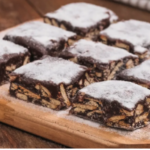
Palha Italiana
Ingredients
- 1 can sweetened condensed milk (e.g. Carnation)
- 1 tbsp Butter
- 1 tbsp Cocoa powder
- 1 pinch ground cinnamon (optional)
- 10-15 pieces biscuits (plain tea biscuits), broken
- granulated sugar or cocoa powder, for coating
Instructions
- Start the chocolate base In a saucepan over medium heat, melt the butter. Add the cocoa powder (and cinnamon, if using) and stir until fully dissolved.
- Add condensed milkPour in the condensed milk and cook, stirring constantly, for about 5–10 minutes until the mixture becomes smooth and slightly thickened.
- Check consistencyThe mixture is ready when it starts to pull away from the bottom of the pan and you can see the pan briefly while stirring. Small bubbles may begin to form.
- Cool slightlyRemove from heat and let it rest for about 5 minutes.
- Add the biscuitsStir in the broken cookies until evenly coated.
- Shape and chillSpread the mixture onto a buttered, rimmed baking sheet. Flatten the top with a spatula.
- RefrigerateChill for at least 2 hours, or until firm.
- Cut and finishCut into squares and roll each piece in granulated sugar or cocoa powder.
- Alternative Serving OptionInstead of chilling and cutting, you can transfer the mixture to a glass dish and serve it with a spoon—either warm or chilled.
Raw Vegan Twix barsA sweet and healthy snack
Raw Vegan Twix bars
Equipment
- 1 food processor
- 1 pan or pot
- 1 Non-stick pan or container
Ingredients
Crust layer
- cup almond flower
- ⅔ cup coconut flower
- ⅔ cup melted coconut oil
- 4 tbsp maple syrup
- 2 tsp vanilla extract
- 1 tsp flaky sea salt
Caramel layer
- 1,5 cups creamy peanut butter
- 4 tbsp almond butter
- ½ cup maple syrup
- ½ cup melted coconut oil
- 2 tsp vanilla extract
Chocolate layer
- ½ cup coconut oil
- ½ cup maple syrup
- ⅓ cup raw cacao powder
Instructions
- Add all crust ingredients to a food processor and blend until fully blended like dough. Add the dough to a non stick pan/container and spread out evenly pushing it down until firm.
- Add all caramel ingredients to a food processor and blend until creamy. Spread it out evenly on top of the crust layer. Store in the freezer or fridge until the caramel layer is firm.
- Add all the chocolate ingredients into a pan and blend it on low heat until everything is melted and blended together. Pour it on top of the caramel layer. Store in fridge or freezer until firm.
- Enjoy it out of the freezer or fridge.